 ≥98% HPLC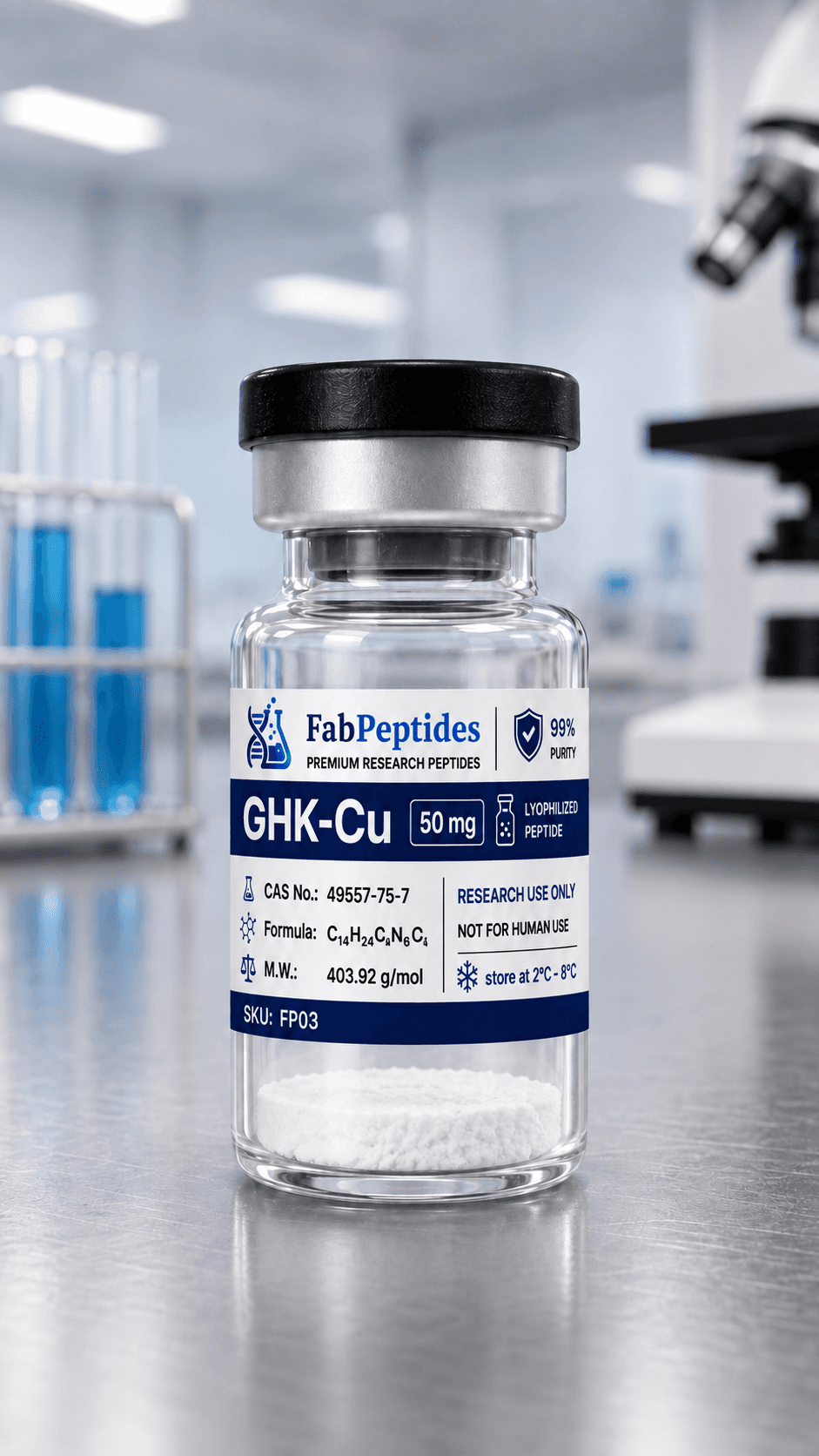
Regenerative Research
GHK-Cu 50mg
£17.99
In stock: same-day dispatch before 1pm
Mix & Match Savings
Combine any products: the discount applies to every vial in your basket.
1
For laboratory research use only. Not for human consumption, medical or veterinary use.
- HPLC Tested & Verified
- Free Next-Day Delivery Over £100
- Discreet & Secure Packaging
- Secure Checkout
Specifications
- Product Name
- GHK-Cu
- Alternative Names
- Copper Tripeptide-1, Glycyl-L-histidyl-L-lysine Copper Complex
- FabPeptides SKU
- FP03
- Strength
- 50mg
- CAS Number
- 49557-75-7
- Molecular Formula
- C₁₄H₂₄CuN₆O₄
- Molecular Weight
- Approximately 403.92 g/mol
- Compound Classification
- Copper–peptide complex
- Peptide Component
- Glycyl-L-histidyl-L-lysine
- Physical Form
- Blue to deep blue lyophilised powder
- Intended Use
- In-vitro laboratory research only
Product information
Product Overview:
GHK-Cu, also known as Copper Tripeptide-1, is a copper–peptide complex consisting of the tripeptide glycyl-L-histidyl-L-lysine (GHK) bound to a copper ion.
This compound has attracted scientific interest for its involvement in copper-associated biochemical processes and its potential relevance to cellular signalling, extracellular matrix regulation and peptide–metal interactions.
Copper is an essential trace element involved in numerous biological processes, including the activity of certain enzymes and proteins associated with cellular metabolism and redox regulation.
GHK-Cu is investigated in experimental research to explore the relationship between copper availability, peptide interactions and cellular regulatory pathways.
This product is supplied exclusively for laboratory research purposes.
Product Specifications:
Research Background:
Copper–Peptide Interactions
GHK-Cu is a complex formed between the naturally occurring tripeptide glycyl-L-histidyl-L-lysine and a copper ion.
The peptide component has a strong affinity for copper, making the complex relevant to investigations of metal binding and copper-associated biochemical activity.
Copper is an essential trace element involved in a variety of biological processes, including enzymatic activity, redox chemistry and cellular metabolism.
Research involving GHK-Cu examines how peptide–metal interactions may influence copper availability and associated cellular processes.
Mechanism of Interest
Experimental research has investigated GHK-Cu in relation to several biochemical and cellular pathways.
Areas of interest include:
- Copper binding and metal-ion interactions.
- Copper homeostasis and bioavailability.
- Extracellular matrix-associated processes.
- Cellular signalling and gene expression.
- Redox-related biochemical activity.
- Cellular growth, differentiation and tissue-remodelling pathways.
Responses observed in experimental systems may vary according to concentration, exposure duration and the biological model used.
These areas describe ongoing scientific investigation and should not be interpreted as established therapeutic outcomes in humans.
Applications in Research
GHK-Cu may be investigated in laboratory studies involving:
1. Copper Binding and Transport
Research examining peptide–copper interactions, metal binding characteristics and copper availability in experimental systems.
2. Copper Homeostasis
Investigation of biochemical processes involved in copper regulation and metal-associated cellular activity.
3. Extracellular Matrix Research
Experimental studies examining cellular pathways associated with extracellular matrix organisation and remodelling.
4. Cellular Signalling
Research investigating peptide-mediated and copper-associated signalling processes in biochemical and cellular models.
5. Redox-Related Research
Studies examining copper-dependent biochemical activity and its relationship with redox-sensitive cellular processes.
6. Peptide–Metal Interaction Studies
Use as a research compound in investigations exploring the interactions between biologically relevant peptides and metal ions.
These applications represent research areas and do not establish clinical efficacy or safety for human use.
Quality & Batch Information:
FabPeptides is committed to providing clear product information and transparent research documentation.
Purity specification: ≥99% HPLC, where supported by the relevant batch documentation.
Storage & Handling:
- Protect from moisture and direct light.
- Store under the conditions specified in the applicable batch documentation.
- A storage temperature of –20°C or below is commonly specified for this material, subject to confirmation against the relevant stability information.
- Follow appropriate laboratory storage procedures.
Laboratory Handling:
Appropriate laboratory safety procedures should be followed when handling research compounds.
Consult the relevant safety documentation and experimental protocols before handling.
Any preparation or use must remain within the permitted research-only scope of this product.
Important Research-Only Notice:
For in-vitro research use only.
This product is supplied strictly for laboratory research purposes.
It is not intended for human or veterinary use, consumption, injection, administration or diagnostic purposes.
This product is not being offered as a medicine and must not be represented as an authorised treatment or cure for any disease or medical condition.
Purchasers are responsible for ensuring that their intended research activities comply with all applicable laws, regulations and laboratory safety requirements.
FabPeptides
PREMIUM RESEARCH PEPTIDES
FabPeptides is committed to providing clearly presented product information and research-focused materials.
All products are supplied subject to the applicable research-use restrictions and product documentation.
Delivery: Royal Mail Tracked 24 to UK mainland. See our shipping and refund policies.